
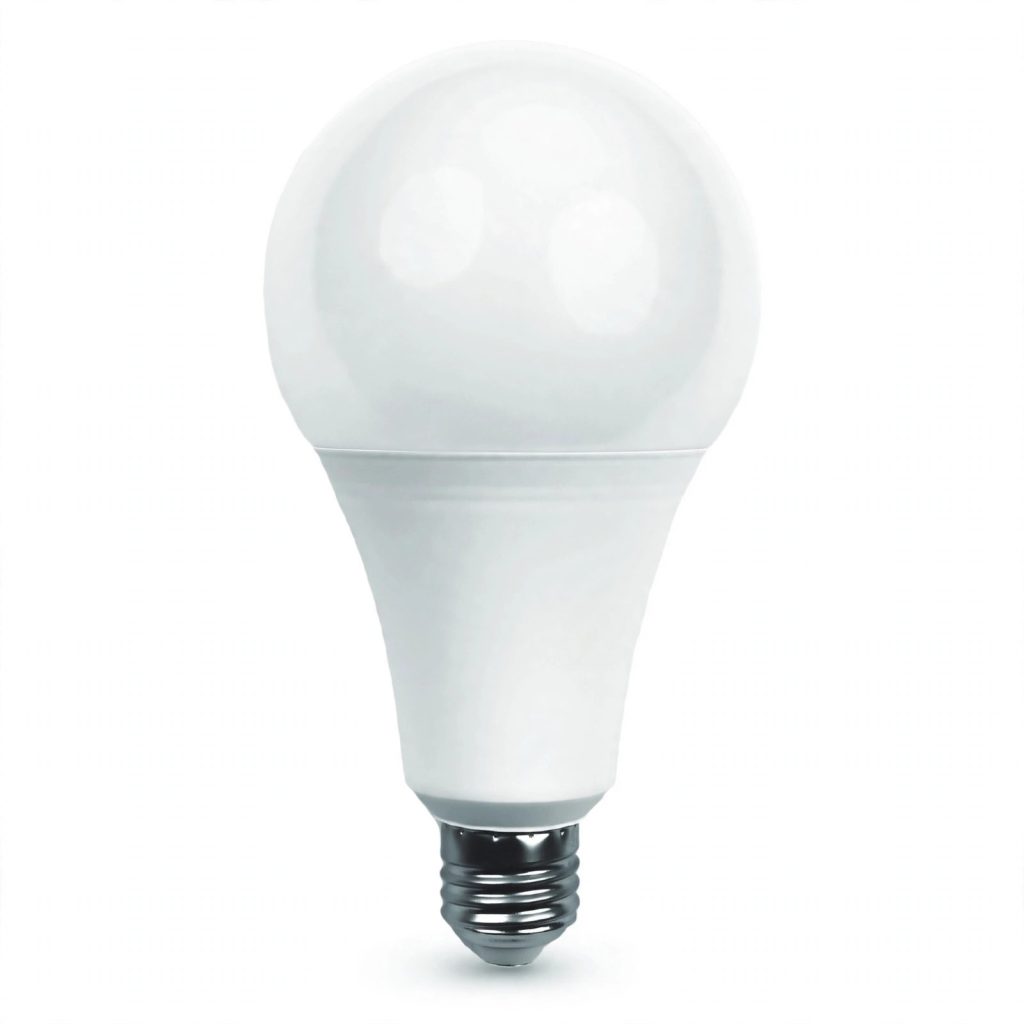
Walk into any lighting wholesaler’s warehouse and you will see the same question on every buyer’s mind: which wattages should I stock? Too low, and rooms feel dim and customers complain. Too high, and you waste energy and money on light nobody needs. The right wattage depends on three things: the size of the room, the height of the ceiling, and what people actually do in the space.
This guide walks through those decisions for the three settings every distributor serves — homes, shops and workspaces.
Start with the room, not the bulb
Wattage is often treated as a brightness number, but it is really a power number: how much electricity the bulb uses. LED bulbs produce far more light per watt than the old incandescent bulbs they replaced, so the wattage figures you remember from the old days no longer apply directly. A small LED bulb can light a bedroom; a large one can light a warehouse.
The practical way to choose is to work backwards from the room. A small bedroom or corridor needs modest light; a living room where a family gathers needs more; a shop floor where customers inspect products needs more still. Before you pick a wattage, picture the room: its floor area, its ceiling height, and whether the bulb is the main light source or just one of several.
Ceiling height matters more than most buyers expect. A bulb in a low-ceilinged apartment sits close to the people and surfaces it lights, so a lower wattage goes a long way. In a hall with a high ceiling, the same bulb has to throw its light much further, and the room will feel dim. High ceilings call for higher wattages, or for more light points.
Homes: layer the light
In homes, one wattage does not fit every room — a household order usually covers several wattages at once.
Bedrooms, corridors and bathrooms are low-demand spaces, used briefly or for rest, and often supplemented by lamps or daylight. Small to medium wattages suit these rooms well, and warmer, softer light is preferred for comfort.
Living rooms and kitchens are the workhorses of the home. Families cook, read, eat and gather there, often in the evening when daylight is gone. These rooms need noticeably more light than a bedroom, especially if the bulb is the only ceiling light. Open-plan living areas, which combine kitchen, dining and seating in one space, need the most of all — either a higher wattage or several light points spread across the ceiling.
Shops: light sells the product
In a shop, lighting is not just about seeing — it is about selling. Customers need to see colours accurately, read labels and feel comfortable browsing. A dim shop feels uninviting; an over-lit one feels harsh and wastes electricity during long opening hours.
General shop lighting — the ceiling bulbs that light the whole floor — should be bright and even, with no dark corners. Display areas deserve special attention: shelves, counters and window displays often need their own, brighter light points so products stand out. This is why shop owners often buy two tiers of wattage: one for general lighting and one for display. A shop lit for long hours each day also spends far more on electricity than a home, so choosing the right wattage, rather than simply the brightest, keeps running costs down.
Workspaces: match the task
Offices, workshops and warehouses each set different demands. An office needs steady, even light for reading documents and screens without eye strain or harsh glare. A workshop needs strong light over benches and machines, where detail work happens and safety depends on seeing clearly. A warehouse needs light that reaches the floor from high ceilings and covers wide aisles.
For workspaces, it is often better to add more light points than to push a single bulb to a very high wattage. Several evenly spaced bulbs give more uniform coverage and fewer shadows than one bright source. When you plan a workspace order, count the light points first and then pick a wattage that suits each point’s height and coverage area.
Build a range, not a single wattage
For a distributor or wholesaler, the lesson is simple: stock a range, not a single wattage. A practical starter range covers small rooms, medium rooms and large or high-ceilinged spaces, so that one customer — a housing project, a retail chain, a small factory — can buy everything from one supplier. MUYI’s LED bulb range covers 3W to 200W, so homes, shops and workspaces can all be served from a single catalog, and every product is available as a finished bulb, in SKD or CKD form, with OEM branding if you need it. You can browse the full range on our products page (https://muyibulbs.com/products/) and read how local assembly works on our SKD & CKD page (https://muyibulbs.com/skd-ckd/).
Two final buying tips. First, confirm details such as the base type and light colour with your customers in advance — a bulb that does not fit the socket is a return, not a sale. Second, remember the order quantity: our minimum order is 1,000 pieces per product, so plan your wattage mix in multiples that keep each line above that threshold.
Tell us the rooms your customers light, and we will help you put together a wattage range that fits. Send your inquiry here: https://muyibulbs.com/contact/ — we reply within 24 hours on business days.