
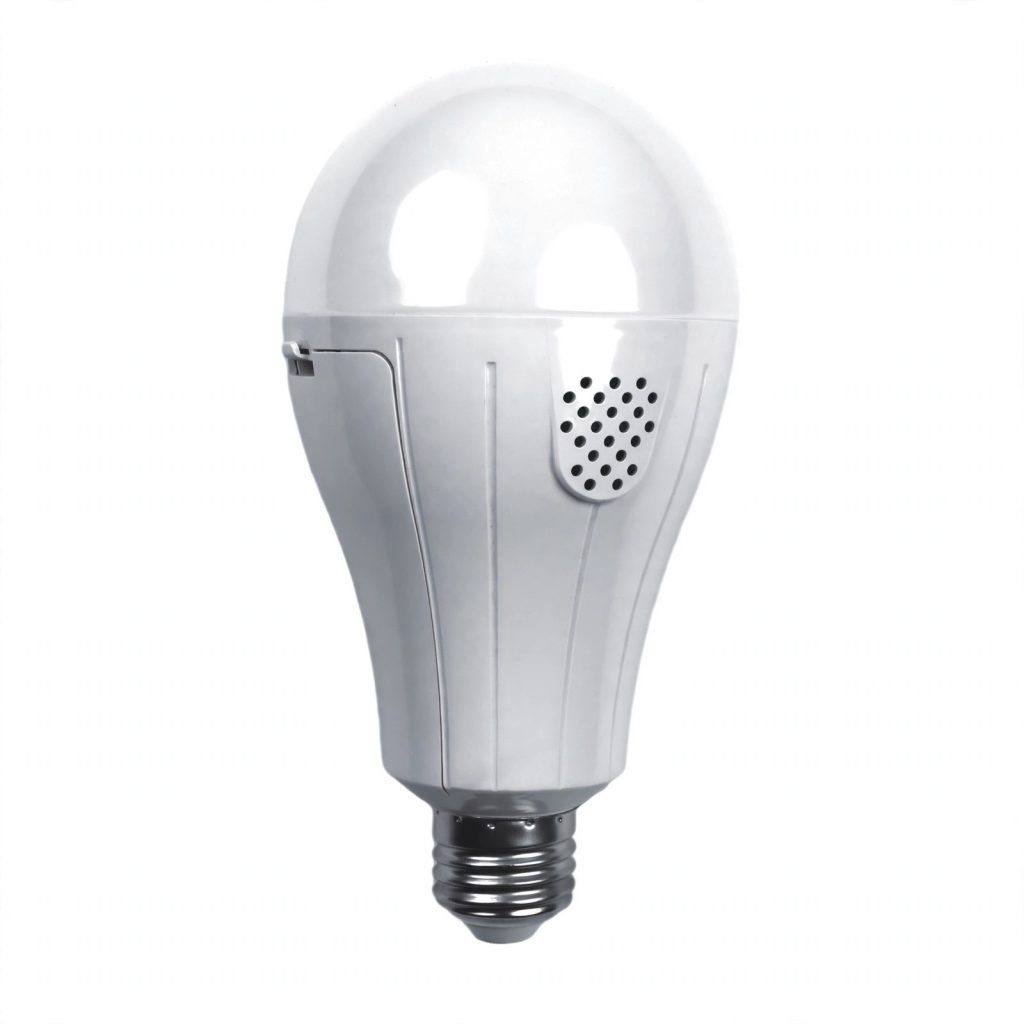
In many of the markets MUYI serves — across Africa, South Asia and Southeast Asia — power cuts are not an emergency event. They are part of daily life. Homes plan around them, shops lose selling hours to them, and students study around them. That is exactly the problem the emergency LED bulb was designed to solve, and it is why this category keeps growing for importers and distributors.
What is an emergency LED bulb?
An emergency bulb looks and works like an ordinary LED bulb: you screw it into a standard socket and it lights the room. Inside, alongside the LED and driver, there is a rechargeable battery. While the mains power is on, the bulb lights normally and charges its battery in the background. The moment the power fails, the bulb switches to battery power and keeps shining — no generator, no separate lantern, nothing to find in the dark.
Our range includes a double-battery emergency bulb (https://muyibulbs.com/product/double-battery-emergency-bulb/) built specifically for markets where outages are frequent and can last for hours.
Why two batteries?
Backup time is the whole point of an emergency bulb. A double-battery design stores more energy than a single-battery one, which means longer light during an outage — the difference between a bulb that fades during the first hour and one that sees a household or a shop through the evening. For retailers, it is also an easy benefit for customers to understand on the shelf: more stored power, longer backup.
Where emergency bulbs sell best
Homes. The core market. One bulb in the living room and one in the kitchen covers a family through most outages.
Small shops and street vendors. A dark shop cannot trade. An emergency bulb keeps a small business open through the cut, with no extra equipment.
Clinics, schools and offices. Places that cannot simply stop when the grid does. Emergency bulbs provide instant light with zero installation work.
Rental housing and hostels. Tenants will not invest in wiring or inverters, but they will buy a bulb they can take with them when they move.
Notice the pattern: the bulb fits an ordinary socket and needs no installation, no electrician and no behavior change. That is what makes it such a strong retail product in outage-prone regions.
What importers should check before ordering
Emergency bulbs are not all equal, and the differences are inside the housing where your customers cannot see them. Before you order, confirm these points with your supplier:
- Battery capacity and backup time — how long the bulb actually shines on battery, at what brightness.
- Charging time — how many hours of mains power the battery needs to refill, which matters where outages are long and power windows are short.
- Battery type and cycle life — how many charge cycles the battery is rated for, since this decides the product’s real lifespan.
- Base type — whether your market uses screw (E27) or bayonet (B22) sockets, so the bulb fits your customers’ homes.
- Wattage and brightness options — enough to cover both small rooms and larger spaces.
Ask for these figures in writing and test samples under your own outage conditions before committing to volume.
Supply options from MUYI
MUYI supplies emergency bulbs — like every product in our range — as finished products, SKD kits or CKD parts, with OEM options for your brand and packaging. If your market suffers regular power cuts, this is one of the most practical products you can put on your shelves.
Browse the range on our products page (https://muyibulbs.com/products/), or send us an inquiry with your market and estimated quantity, and we will reply within 24 hours on business days: https://muyibulbs.com/contact/