
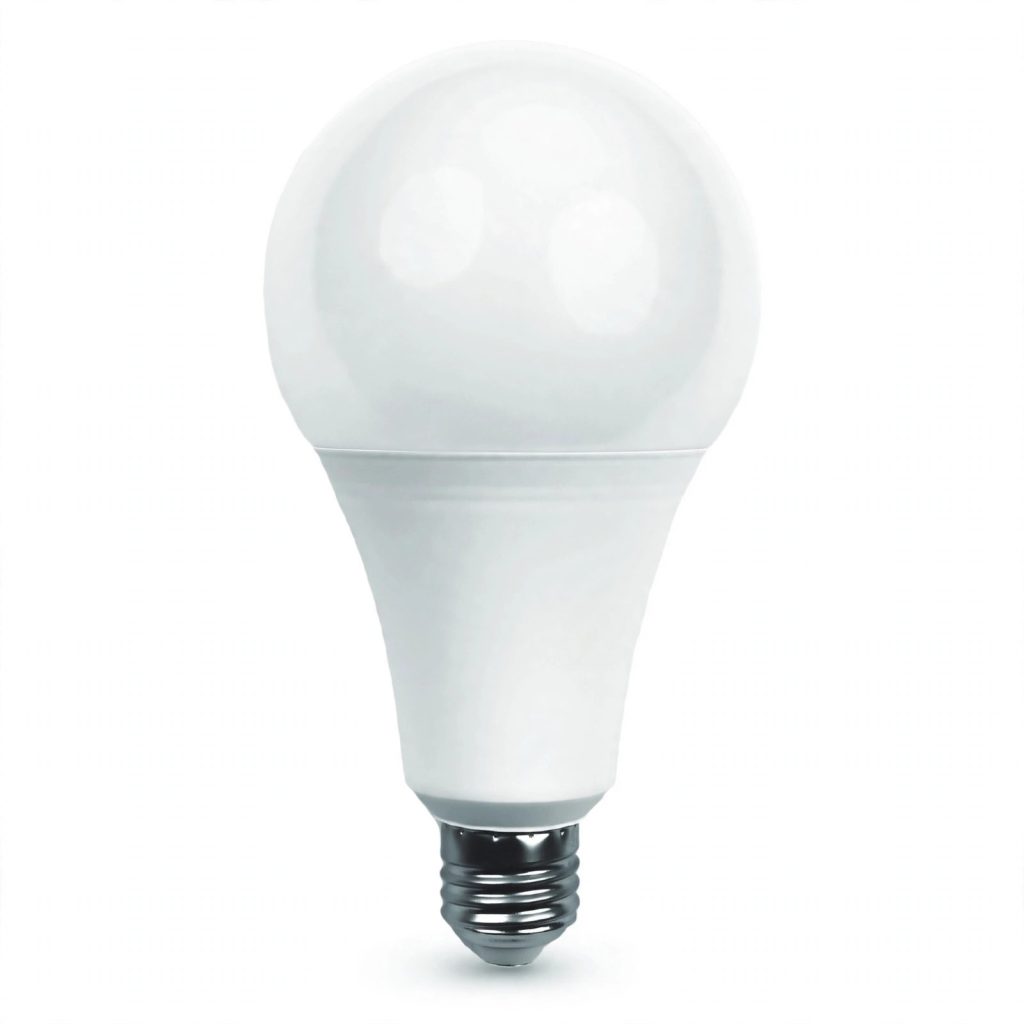
Every importer has a version of the same story: the sample was bright, the price was right, and the bulk order flickered, ran hot, or came back from customers within months. The parts that decide whether an LED bulb lasts — the driver, the heat path, the consistency from one bulb to the next — are exactly the parts a catalogue photo cannot show you.
This guide is a practical LED bulb quality check to run on samples before a bulk order, plus a simple inspection for the first shipment. None of it needs a laboratory — time, a few tools, and the discipline to check before you pay rather than after.
Check the sample, not just the quotation
A low price per piece tells you nothing about what is inside the bulb. Experienced buyers treat the sample stage as the real negotiation: the bulk order should be a repeat of a sample you have already tested, not your first look at the product.
Order samples of every wattage and base variant you plan to stock, not just one representative bulb. Test them, then keep one of each variant, marked, as your reference — if a later shipment is disputed, that kept sample is the standard both sides agreed to. Our guide to how to order LED bulbs from a factory in China covers where samples sit in the ordering flow.
The six checks that matter most
1. Driver and heat
The driver — the small circuit board inside the bulb — is where most early failures start. You judge it by its consequences. Run the sample at your market’s voltage for two to four hours. A well-built bulb gets warm; it should not get too hot to hold at the base, smell of hot plastic, or flicker as it warms up. Flicker that appears only after an hour is a heat problem announcing itself early.
2. Housing material and build
Pick the bulb up. The housing should feel solid, with no sharp edges, no loose parts, and an even diffuser. Plastic housings vary widely: one that flexes or creaks in the hand usually signals thin material that ages badly in a hot ceiling. Twist the base gently: any movement between base and housing is a reject.
3. Light output: does it match the claim?
Exact lumen figures need instruments, but you can catch the commonest problem — a bulb visibly dimmer than its claimed class. Compare the sample with a bulb of known output, against the same wall. As general market guidance, mainstream LED bulbs typically produce around 80–120 lumens per watt, so a “9W” bulb that lights a room like a 5W is telling you the claim and the contents disagree. Our lumens and wattage guide explains how the brightness classes compare.
4. Colour temperature consistency
Switch several samples of the same variant on together. Colour temperature — warm white around 2,700–3,000K, neutral white around 4,000K, daylight around 6,000–6,500K, as typical market ranges — should look identical from bulb to bulb. One bulb visibly warmer or greener than its neighbours means loose sorting at the factory, and your customers will see the difference across a ceiling. Check consistency within the sample set now; across a bulk order it only gets harder to correct.
5. Base and holder fit
Try the sample in several real holders of the type your market uses — older ones as well as new. An E27 should thread in smoothly without force; a B22 should click in firmly without wobbling. A fit problem that is minor on one sample becomes thousands of returns across a bulk order. If you are still settling your market’s base split, our guide to E27 vs B22 LED bulbs covers which base to stock where.
6. Burn-in: leave them running
The cheapest ageing test is time. Run a set of samples continuously for at least 24 hours before confirming the order — several days is better. Note any that fail, dim noticeably, shift colour or start flickering. A set that survives a week of running has told you more than any datasheet: a failure now costs you a sample; the same failure after shipment costs you the order, the freight and the customer.
Packaging and carton checks
Quality includes the packaging. Check the box the way your warehouse will: does it actually protect the bulb, or let it rattle? Are wattage, base and colour temperature printed correctly, and the same on every box? Then drop a packed carton from about waist height onto a hard floor, open it, and confirm the bulbs inside still work. Weak cartons fail in containers and warehouses, not in shops — and damage discovered at your end is damage you pay for.
What to ask the factory — and get in writing
- The full specification of the exact variant: wattage, claimed lumens, colour temperature, base, and the voltage range it is built for — the last matters most in markets with unstable supply.
- That production matches the sample: confirm in writing that bulk units are built to the same specification as the approved samples.
- The remedy if the batch differs: agree what happens if the delivered goods do not match the approved sample — before the order, not during a dispute.
- For own-brand orders, a branded sample: approve the printed bulb and finished box at the sample stage. Our OEM guide explains how branding and packaging are agreed.
A factory that answers these clearly, in writing, is telling you something about how it will handle problems later.
A simple incoming inspection for the first shipment
Inspect the first bulk shipment before you distribute it — once stock is spread across your dealer network, a batch problem is far harder to contain.
- Sample randomly. Open cartons from different parts of the shipment and pull bulbs at random, not just from the top of one box.
- Compare against the kept sample. Brightness, colour, housing, base fit and packaging should match the approved sample.
- Run a burn-in set. Switch on a group taken from the shipment and leave them running for a day; log any early failures.
- Count and record. Note how many you checked and what you found, with photos. A short record turns a vague complaint into something a factory can act on.
If it passes, later shipments need only spot checks. If it does not, you have caught the problem while the evidence — and the stock — is still in one place.
Ordering from MUYI
MUYI LED (Zhongshan Muyi Trading Co., Ltd.), a factory in Zhongshan, Guangdong, manufactures LED bulbs, panel lights, downlights, UFO high-bay lights and ceiling lights from 3W to 200W, plus LED modules, supplied finished, SKD or CKD. The minimum order is 1,000 pieces per product, the lead time is 7 days for regular orders, and OEM branding and packaging are available under your own brand. Browse the range on our products page, and send us your market, variants and quantities via our contact page or on WhatsApp at +86 188 7397 4440 — and ask for samples first. We would rather you checked our bulbs hard before the bulk order than discovered anything after it.