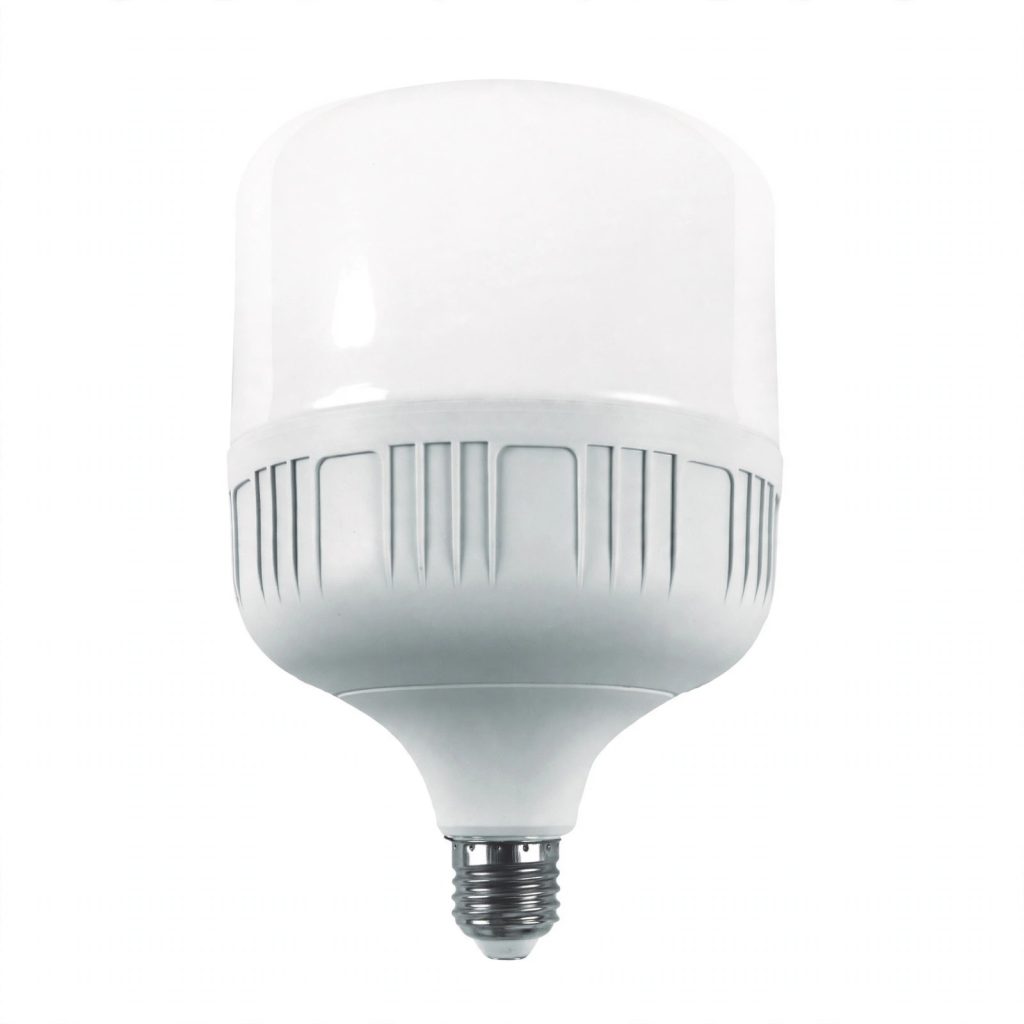
If you already sell LED bulbs under a distributor’s brand, or under no brand at all, OEM is the step that turns a commodity purchase into your own product line. Instead of reselling someone else’s box, you put your name, your logo and your packaging on bulbs made to your specification — and you keep the relationship with your customers.
This guide is written for importers and distributors, not for engineers. It explains what a factory actually needs from you, what to agree in writing before production, and where first-time OEM buyers most often run into trouble.
What “OEM” means for LED bulbs
OEM — original equipment manufacturing — means the factory makes the product, and you own the brand on it. In practice for MUYI, that covers three things, which you can mix and match:
- Your brand on the bulb. Your brand name and logo printed on the bulb itself, where the product allows it.
- Your packaging. Your box design, your colours, your product information on the carton — instead of a generic or factory box.
- Your specification. The wattage, base and format you have chosen for your market, within the factory’s range.
What OEM does not mean is that you need to design a bulb from scratch. You are choosing from an existing factory range — LED bulbs, UFO lights, panel lights, downlights, LED modules and ceiling lights, from 3W to 200W — and branding that range as your own.
What to send the factory first
A factory can only quote and plan an OEM order from a clear brief. Before you ask for a price, send these five items, in writing:
- The product and wattage. Which bulb, and which wattages? An A Bulb in 9W is a different order from the same bulb in 15W.
- The base. E27, B22, or another base your market uses. Getting this wrong is one of the most common — and most avoidable — OEM mistakes, because a bulb with the wrong base cannot be sold in that market at all.
- The format: finished, SKD or CKD. Finished bulbs arrive ready to sell. SKD kits and CKD parts arrive for local assembly, which can change import duties and local content — but they also change what you need on your side. Decide this before branding is agreed, not after.
- The quantity per variant. MUYI’s minimum order is 1,000 pieces per product. That is per product, so three wattages of one bulb are three products for MOQ purposes. Count variants early, or a small-looking order can quietly become a large one.
- Your brand and packaging files. Your logo, your brand name as it should appear, and your box artwork or a clear description of it. If you do not have finished artwork yet, say so — it is better to agree that at the start than to discover it mid-production.
If any of these five are missing, the honest answer from a factory should be a question, not a quotation. A quotation built on a guessed base or a guessed quantity will be wrong in exactly the place that matters.
Branding and packaging: agree the details, not just the idea
Most OEM disappointment is not about the bulb. It is about a detail that was never written down. Before production, confirm in writing:
- Where the brand appears — on the bulb, on the box, on the carton, or all three.
- The exact spelling and artwork — including which logo file is the final one. Keep one approved version, and name it.
- What the box must say — product name, wattage, base, and any information your market requires on packaging. Do not assume the factory knows your local labelling rules; tell them what yours are.
- Who checks the proof. Ask to see and approve the branded artwork before it goes into production, and keep that approval in the same thread as the order.
This is also the point to raise anything your market is strict about. If a retailer or regulator in your country will reject a box for a missing detail, that detail belongs in the order, not in a complaint after delivery.
How an OEM order flows, step by step
The flow is deliberately ordinary — that is what makes it reliable:
- You send the brief — product, wattage, base, format, quantity per variant, brand and packaging.
- The factory confirms it can make that exact combination, and you agree the specification in writing.
- Branding and packaging are approved before production.
- Production runs — MUYI’s lead time is 7 days for the production step, once the order and its details are confirmed.
- The order ships in the agreed format — finished, SKD or CKD — to your destination port.
Note what is not in that list: a price, a sample charge, or a shipping cost. Those depend on the product, the quantity, the format and the destination, and they should be quoted for your specific brief — not copied from another buyer’s order. If you are comparing factories, compare quotations for the same brief, not headline prices for different products.
Three mistakes first-time OEM buyers make
Ordering one variant too many — or too few. Because the MOQ is per product, a range of “just a few wattages” can cross the threshold quickly. List every variant, then cut the list deliberately, rather than discovering the total at quotation stage.
Branding the wrong product for the market. A bulb that sells well in one country may need a different base, wattage mix or box in another. Match the product to the market first, then brand it. The E27 vs B22 choice alone can decide whether a shipment sells or sits.
Treating packaging as an afterthought. Your box is what your customer sees first, and in many markets it is what a retailer judges first. Agree it early, approve it in writing, and do not let production start on an unapproved design.
Is OEM right for you?
OEM makes most sense when you already have customers, a sales channel, or a market position to protect — and you want repeat orders under a name your customers recognise. If you are testing a brand-new market with no channel yet, a first order of finished, unbranded or factory-branded stock may be the cheaper way to learn what sells, before you commit to your own packaging.
Either way, the question to ask yourself is not “can I get my logo on a bulb?” — you can. It is “do I know exactly which bulb, in which wattage and base, in what quantity, for which market?” If you can answer that, you are ready to brief a factory. If you cannot, that answer is the work to do first — and it is work worth doing before any money changes hands.
Ordering OEM from MUYI: the short version
Send product, wattage, base, finished/SKD/CKD format, quantity per variant, destination port, and your brand and packaging details. MUYI supplies LED bulbs and related lighting from 3W to 200W, finished, SKD or CKD, with a minimum of 1,000 pieces per product and a 7-day production lead time, and welcomes OEM orders under your brand.